NB: Not every pin you see is a fake and much less than 5% of pins that Disney has ever made have been faked. But a lot of popular ones have - and in large numbers - so always be prepared.
Pin trading is meant to be fun - and for most people it is. But there's one thing every trader or collector eventually learns: not all Disney pins are genuine - and knowing how to tell the difference could save you a lot of disappointment.
NB: If you're going to be Pin Trading at Disneyland Paris, please read this guide.
Causal Pin Traders
If you or your children just like trading pins in the US parks for ones you like and you don't care about their value, then this article isn't for you. Enjoy yourselves but please abide by the most important rule: Only trade like-for-like.
Please don't take a real Disney pin from a board and replace it with a pin you know to be fake. There's enough dodgy people who will do this on purpose and then sell the real pins for profit.
If you buy a bag of 20 pins from eBay or Amazon for $20, then they are definitely fakes - no ifs or buts. And especially if they're in individual "baggies" with the red stripe at the top. Intentionally swapping one of these for a real pin that originally cost $12-$20 isn't just bad pin trading etiquette, it's ruining pin trading for everyone else. So trade a fake for a fake - and an authentic pin for another authentic pin.
What is a "scrapper"?
 In the Disney pin trading world, the word scrapper is commonly used for pins that look like real Disney pins but are not officially made or authorised by Disney.
Scrappers are rumoured to be either pins that failed Disney quality control and were stolen, or are made from legitimate pin moulds (US: molds) that were meant to be destroyed at the end of their life but ended up being stolen rather than destroyed.
In reality, scrappers are unauthorised copies of genuine Disney pin designs, produced outside of Disney’s control. They are either made by copying an existing pin and manufacturing it using cheaper materials and lower quality processes - or sometimes in the same factories that make the authentic ones, allegedly.
The result is a pin that looks close enough at a quick glance to pass on a trading board, but often shows signs of poor quality when you look more closely.
Why are they called “scrappers” and not just fakes or counterfeits?
The term scrapper is a community word, not a Disney one.
It became popular because it sounds less confrontational than calling a pin a fake. Saying a pin is a “scrapper” avoids accusing anyone of cheating, especially as many people unknowingly buy job lots of pins online and do not realise they contain unofficial (and usually, bad) copies.
Over time, the name stuck for all fakes, even though it does not accurately describe how most of the counterfeit pins are made.
Disney Pin Boards and Fakes
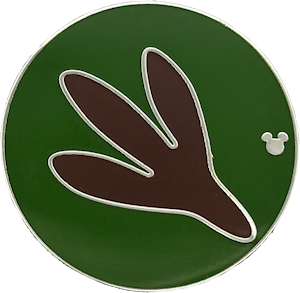 It seems as if you'll find a single real pin on maybe 3 out of 5 boards in the US parks - and that's on a good day. You will start to see the same pins over and over again. My personal nemesis is Kevin's footprint (from Up, pictured) from the Disneyland California Adventure Trail badge pin set (2013). It seems to be everywhere!
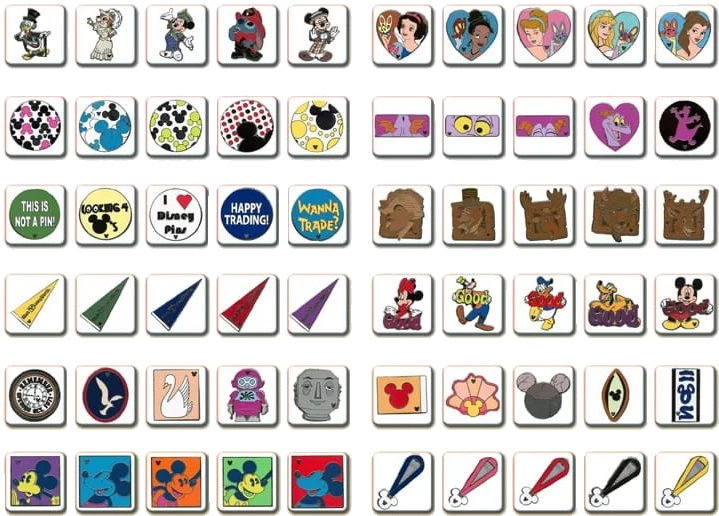
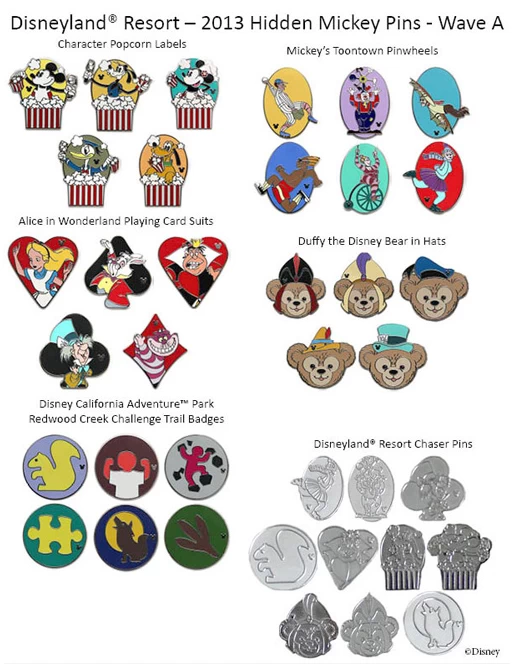
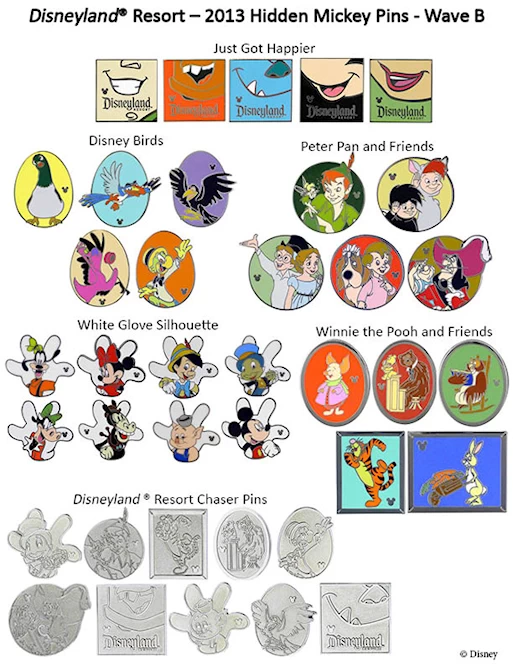
The same pins tend to be on the boards because a lot of the fake Disney pins sold online are currently from the WDW 2010 Hidden Mickey series and the Disneyland Resort 2013 Hidden Mickey Series. There must be hundreds of thousands of these in circulation; for sale; and on pin boards around the world.
The good news is that if you recognise these then you're on your way to ignoring them on boards - unless you want one of course!
The second piece of good news is that very few Hidden Mickey series released since 2020 have been widely faked. In general, the newer the series, the less likely it is to have been copied.
At the time of writing, the exception appears to be the 2025 Wave A Hidden Disney sets. Click on any of the castles on the previous Pin & Pop link to see how to spot a fake castle.
That means you should usually be fairly safe trading for or buying 2021 to 2025 Hidden Disney pins - just be wary of the Wave A Hidden Disney pins from 2025.
It's always worth keeping an eye on Facebook groups (search for Disney Pin Trading) and trusted pin trading creators on social media, as they are often the first to spot new fakes.
It's also worth referring to past releases. Disney regularly release new pin flyers for all the parks (including international ones) - I have this page bookmarked on MyPinCentral, as I can also do a search or WDW or Paris or 2021, etc.
The Most Faked Pins
These are the most commonly faked pins for sale on eBay/Amazon and consequently on the US boards. There are many more - like the padlocks - but you'll see these a lot. They are as follows (click to open larger versions in a new tab):
- Walt Disney World 2010 Hidden Mickey Series
- Disneyland Resort 2013 Hidden Mickey Series Wave A
- Disneyland Resort 2013 Hidden Mickey Series Wave B
How to spot a fake pin
There's no single giveaway, but a few clues will help you tell a genuine Disney pin from an imposter. Here is an example of a genuine Disney pin for comparison (photo copyright MyPinCentral):

1. The Pin Back
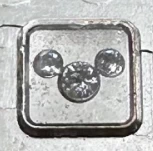 On newer pins, there will be a small Mickey head made up of 3 small fake diamonds (the so-called "Diamond Mickey"). They are cubic zirconias and should have a clear resin dome over them, which you will be able to feel if you're not buying online. These started appearing on pins destined for the US parks in early Spring 2023, so will not be on pins earlier than 2023 or on non-US pins (Disneyland Paris pins don't have them, for example).
These are more expensive for the counterfeiters to reproduce - but of course they have - and usually badly, with the "ear diamonds" not flush against the "head diamond". Read more about Diamond Mickeys and "Diamond for Diamond" pin trading here.
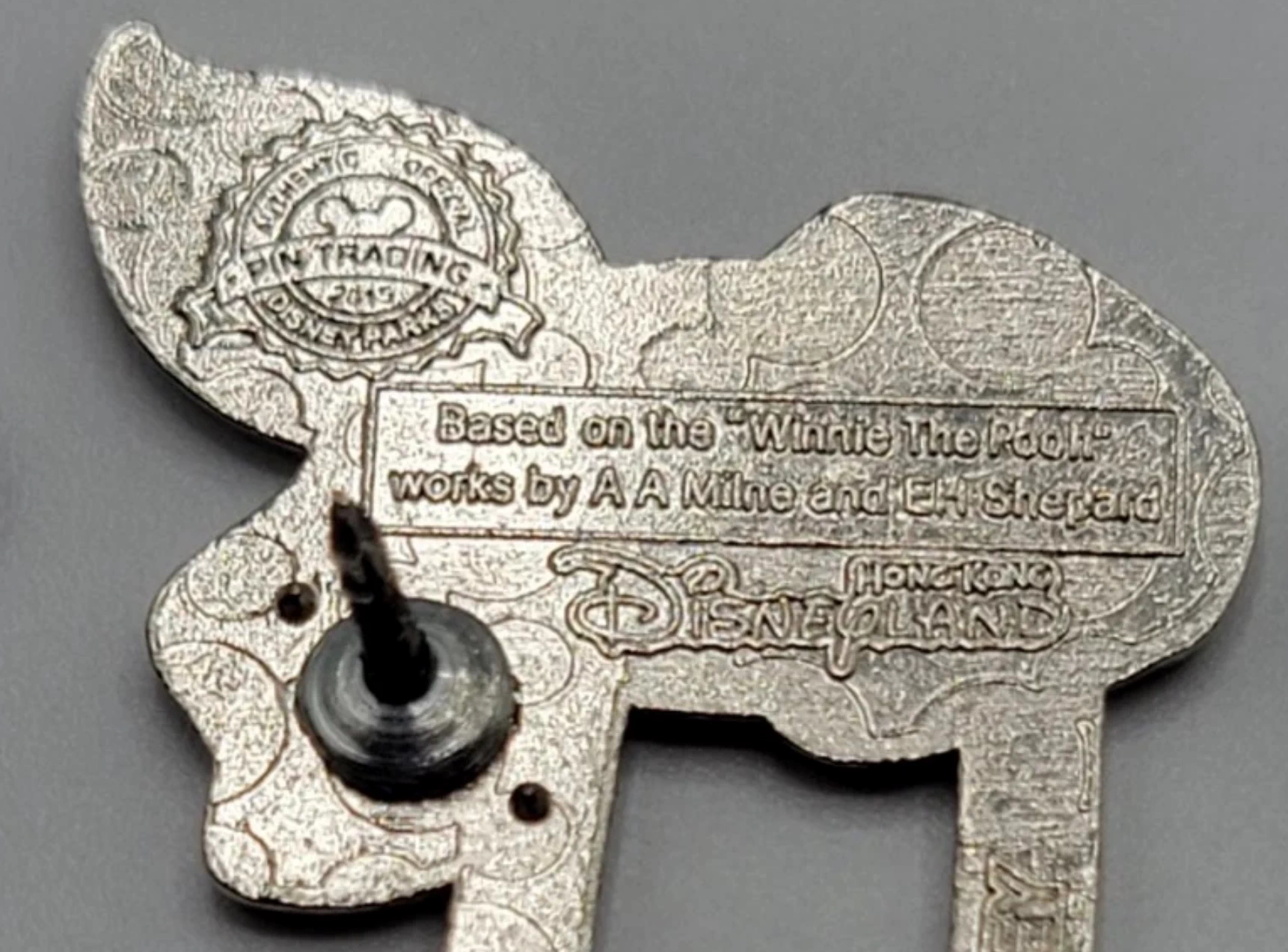
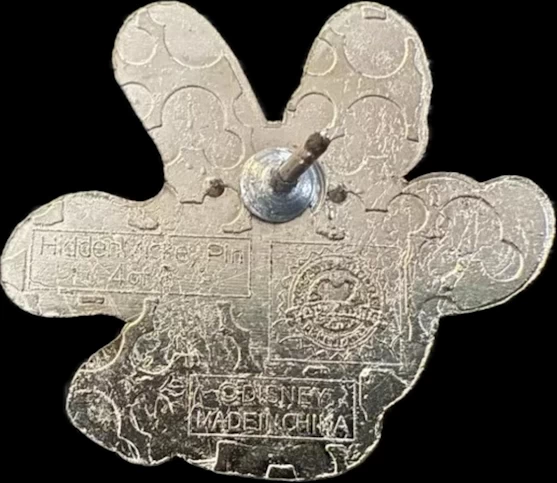
Both of the backs in the two photos are of fakes. Look at the Mickey Ears "waffle" pattern on the back of the pin, along with the writing.
- On the first photo, the Mickey-waffle is horizontal, whereas it should be vertical (with the Mickey ears going up and down).
NB: I have recently discovered an authentic pin that does have the horizontal Mickey-waffle though! It's Alice's Curious Labyrinth 2014 Disneyland Paris pin from their attractions series - so there's always an exception that proves a rule. - The Mickey-waffle should be shiny, sharp, evenly spaced and reach right to the edge. On a fake, the Mickey-waffle is often faint, blurry or stops short of the border.
NB: There were some Hidden Disney pins from the COVID years (2020-2022) that didn't reach the border and quality control can always fail. - The second photo's Mickey-waffle may be the right way around but it's scratched, dull and the impression doesn't have an even thickness.
- Look at the edges of the pin - does it look like it's rolled up (the cookie-cutter effect), or do the edges gently finish smoothly?
NB: Genuine 2022 pins tended to have a cookie-cutter edge for a while, so always look at multiple things. - The writing should be easy to read (if not too small) and clear with no joined up/smushed together letters or numbers.
Older pins have a variety of different patterns or sandblasting appearance on the back, so refer to an online database to compare, especially if you're trading for, or buying, an expensive pin. MyPinCentral and Pin & Pop have the most photos of backs and Pin & Pop holds a more extensive "This pin has been faked" database.
NB: Some pins have dark or coloured (pink, black, blue) backs rather being than shiny silver or gold - these are mostly found on Marvel and Star Wars pins but could crop up anywhere so always check against a pin database.
If you can, compare your pin to photos on trusted sites such as My Pin Central, Pin Pics or Pin & Pop, which show the backs of genuine pins in detail - although I have seen photos of fake pins being uploaded to even those reputable sites. The photo has hopefully been uploaded by a well-meaning trader who didn't know they owned a fake BUT I've also seen someone trying to sell a fake pin on eBay upload their own photos to the databases to try and prove it's real! It wasn't difficult to catch them out because they used the same photos - with the same garish carpet background - for both. Scammers aren't very intelligent sometimes 🤦♂️
Always see the pin back without the rubber Mickey
If you are trading or buying a pin online and the photo only shows the front, then ask the seller for a photo of the back without the rubber Mickey. Also if there are photos of the back with the rubber Mickey on the pin tack, you must ask for photos without it, otherwise don't enter into a transaction.
One way to pretty much guarantee that the seller knows that they're selling a fake, is when they finish their listing description with: "I can't guarantee the authenticity of the pin" or words to that effect. This is a massive red flag 🚩 - do not buy this pin without knowing what you're doing.
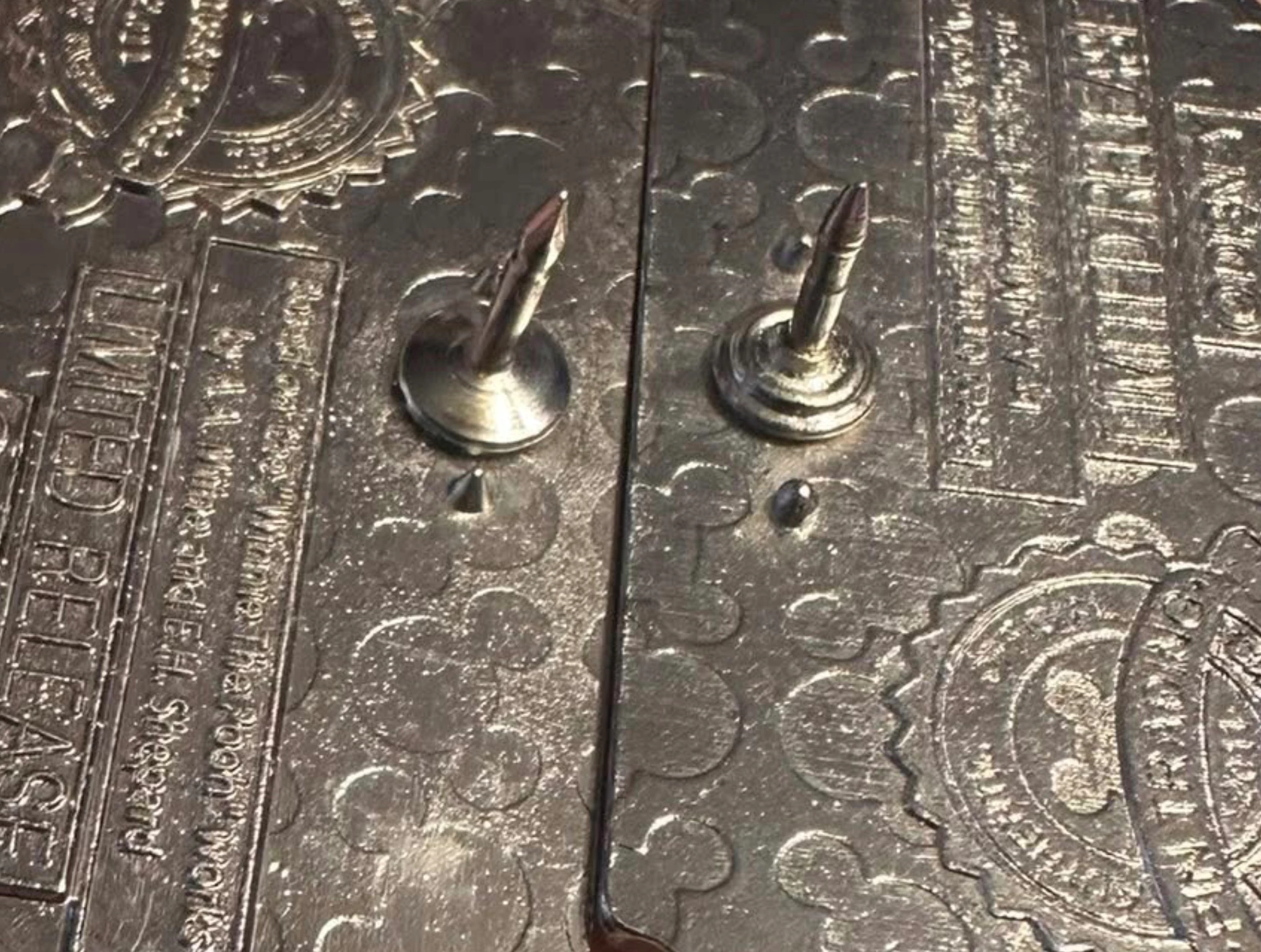
The following photo shows the same pin with the authentic one on the left and a fake one on the right.
(I can't remember where I found this photo, so if you are the owner, please let me know so I can credit you!)
If you compare the two same pins, on the authentic one (left):
- the pin tack is sharp and the base is smooth.
- the two nubs (the little bits of metal either side of the pin tack to stop it from moving on a lanyard) are sharp and slim cone-shaped, whereas the fake nubs are blunt and stubby. (Pins with 2 pin tacks won't have nubs and some pins only have one nub.)
- The writing on the authentic one is more defined.
- The starburst around the Pin Trading logo at the top left is well-defined - the same can't be said of the fake one on the right (bottom-right).
- The Mickey-waffle pattern on both are similar, which is why you need to look at more than one thing when judging a pin for authenticity.
Whether the pin is a fake will always be based on cumulative evidence and not just one thing - although if a pin back has any typos then it's definitely a fake!
2. The numbers
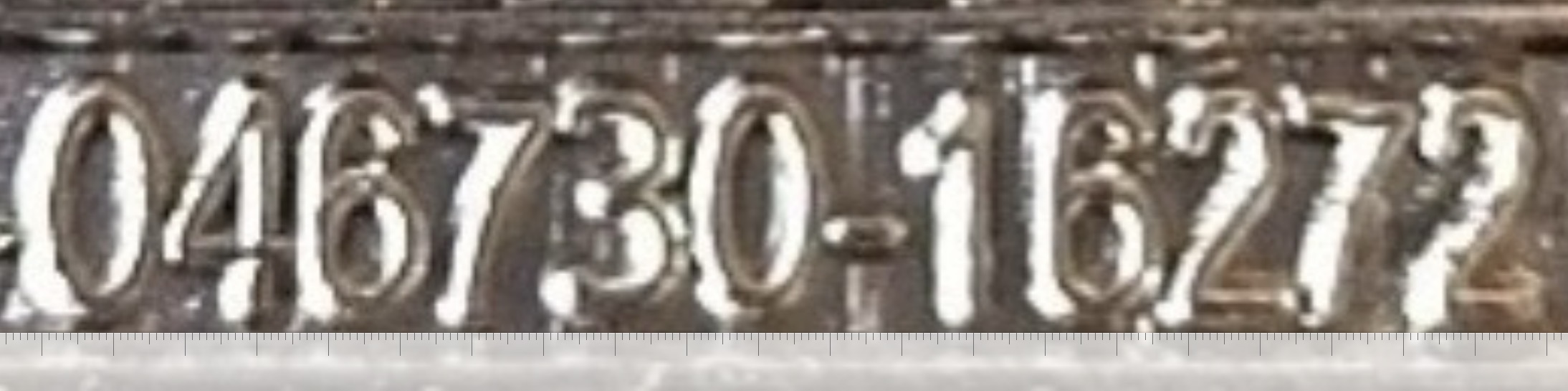
This is an FAC (Factory Authentication Code) number on the back of a fake pin and I've added a ruler to line up to beneath the final number 2.
On an authentic pin all the numbers would also be placed on the top edge of the ruler but they are all over the place on this fake pin, with the second 0 - and the 3 before it - higher than the other numbers.
Grab a piece of paper - or anything that has a straight edge - and line it up above or below the FAC numbers. If you're buying online, use a straight line in a photo editor to draw across the numbers to see the same thing. If they're inconsistent and don't line up, then it's fake.
One easier way to tell if a stamped FAC number is fake, is by the dash (-) between the two numbers. If the dash is touching - or much closer to - the last number of the first set of numbers, then it's a fake. The dash should be centred between the two sets of numbers and not touching the last or first of either number. So 1234- 789 would be fake, whereas 123 - 789 could be authentic.
NB: FAC numbers can appear in different ways on genuine Disney pins. Some are laser-etched, while others are stamped into the metal, like the one above - and there are a few pins that don't have them at all! Placement is often consistent within the same production run but it can vary between different manufacturers or even runs. Over time, many pins move from laser-etched FAC codes to stamped ones. Because of this, the style or position of an FAC number on its own should never be used to decide whether a pin is authentic or fake.
3. The colour and enamel
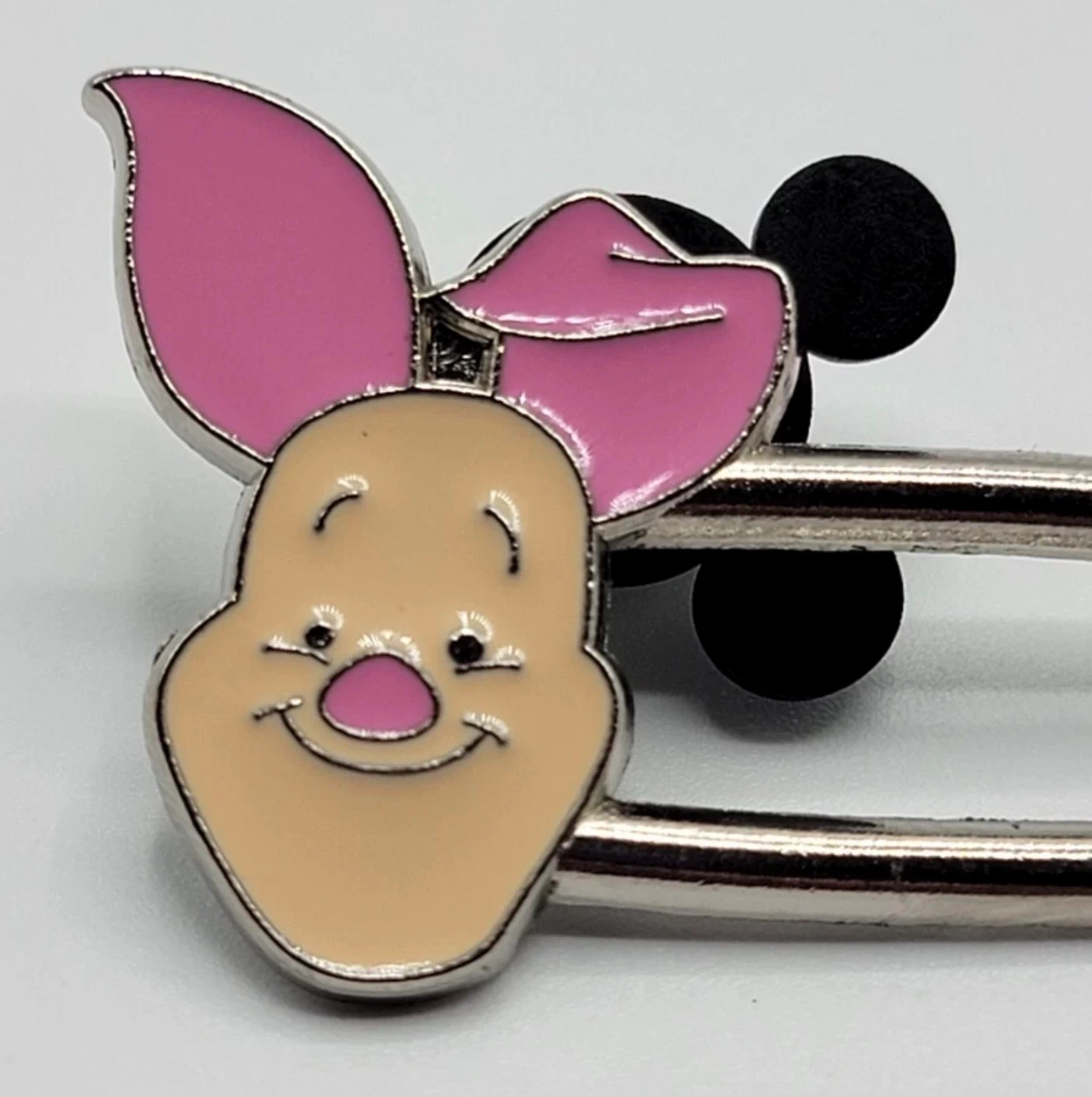 Genuine Disney pins have smooth, glossy enamel that sits flush with the metal edges. On fakes, they use cheaper, soft enamel that will droop over time, feel rough, wobbly or look uneven. Run your finger gently over the surface to check. You don't need to feel this piglet pin to know it's a fake, although this is a particularly bad example.
Fakes rarely get the colours completely right. Again, compare it to authentic pins in online databases to find the correct colours.
NB: Fakes are getting better all the time and some now use harder enamel and metals. If you see a distinct droop in the enamel, like the Piglet pin above, then it makes it easier for you to tell, but don't just assume that it's genuine if it doesn't show the enamel droop!
Have a look at the rainbow of different colours of this piglet pin on sale on eBay! And if you're wondering whether there's a real one among them, well, I'd love to know as well!! I'd say probably the third one but there aren't any reliable photos of the backs on the sale listings, so it's difficult to say definitively from just the photos of the front of the pins, as lighting can also affect colours. This is when you'd ask the seller to send you photos of the back or using daylight for lighting.
Piglet #1 has his black eyes missing and just has 2 white dots instead.
Piglet #2 has very rough edges; mushed line edges; and dipped enamel.
Piglet #3 looks the most genuine of them - but without a reference comparison photo of an authentic pin, I can't be sure.
Piglet #4 is a complete mess! The soft enamel has dipped and this one is easy to spot as a fake.

4. The weight and thickness
Genuine pins feel solid and are much thicker than their fake counterparts. Fakes often use lighter metals or cheaper coatings and can feel flimsy by comparison. You'll soon get used to spotting a counterfeit just from its thickness on the pin board.
And ignore anyone who tells you to carry a magnet with you because authentic Disney pins aren't attracted to the magnet, whereas fake ones will stick it. This is a myth and can't be relied upon.
5. The details
Check for small errors: the metal lines between the enamel that looks like they've been chewed by a dog - they should be smooth, no matter how old the pin is. Also look for off-centre logos, blurry lines, uneven type depth, misspelt words, odd shades of colour or missing features. These are common signs of counterfeits.
The most important thing to verify a pin is that the Mickey-waffle pattern, pin and nub(s) should be in exactly the same place on every genuine pin of the same design and release date/year. Counterfeiters can rarely accomplish this, to the millimetre.
Disney's Quality Control
There are increasing reports of Disney's QA/QC (Quality Assurance/Quality Control) slipping over the past few years - especially since COVID - and people are finding pins that they have just bought from a Disney shop to have issues (no eyes on a character's face, for example). This can be just as annoying as trading for a fake by mistake - but at least you have a receipt and can return and exchange it (if they haven't sold out).
If you were a stamp collector, having a genuine stamp with flaws would increase its value exponentially: With Disney pins, it will just be marked as a scrapper and will be very difficult to trade or sell. But if you like it, then you can always keep it - it's your collection, after all.
Trading in different parks
In the US parks, Cast Members will usually accept anything with © Disney on the back, even if it's not genuine, unfortunately. You should always assume that a pin on a pin board is a counterfeit until you can prove to yourself that it's authentic.
If you have only brought genuine pins with you to a US park, it will ruin your day if you find that you've traded an authentic pin for a worthless scrapper... unless you did it on purpose.
The US parks will also accept LoungeFly, BoxLunch and other 3rd party licensed pins - but not Fantasy Pins as they won't have the Disney copyright on the back.
The non-US parks only accept official, genuine Disney pins and Paris has Pin Masters that will bring out a magnifying glass to check your pin, if they have any doubts or don't know the pin. There is no pin trading in the Japanese parks but you can buy (and win) pins there.
Diamond for Diamond (D4D) Only
Some CMs (Cast Members) will do a "diamond-for-diamond" (D4D) trade - even though that's strictly against the rules as they should accept any pin with © Disney on the back - but even CMs can get embarrassed by the state of their lanyard or pin board.
To counter that, some are quietly refusing fakes by offering D4D trades only i.e. the more recent pins that have Diamond Mickeys on the reverse of the pin, but even those have been faked - but usually badly and they're easier to spot.
Shadow Boxes
Disneyland Resort in California has "Shadow Boxes", which will be 100% authentic pins. These Cast Members trade for mystery pack pins only and you must either open your mystery pack in front of them, or have a receipt - and the original bag - for a mystery pack you bought that day. You can then trade one of your duplicates/unwanted pins for one in the Shadow Box - but you cannot swap a pin if the pin you're leaving is already in the Shadow Box.
Protecting your good pins
Once you start collecting higher-value or Limited Edition pins, keep them separate from your traders. Never put your special ones on a lanyard or you might end up swapping something you didn't mean to. Use a small bag or case for your trading pins and store your keepers safely at home.
Getting the opinion of others
If you're ever unsure about a pin, keep it aside and check it later when you can compare it online - and there's plenty of Facebook "Pin Trading" groups and sub-Reddits that you can post photos to, to ask people's opinions.
Always post clear, close up photos of the pin on a white background with no shadows. Equally as important is to post a photo of the back without the black rubber Mickey-head back. Say whether you're considering buying it or already own it, and what about it makes you suspicious. Do take some time to compare it to at least one online pin database and add your findings, as otherwise you're just asking other people to do the research you should have done yourself and you won't learn how to spot something in future.
A little perspective
Almost every trader ends up with a few scrappers at some point - it's part of the learning curve. The main thing is to enjoy the hunt and trade kindly. If you want guaranteed genuine pins, then only buy directly from Disney stores, resorts or official online releases.
The more you handle real pins, the easier it becomes to spot the fakes.
Helpful resources
If you'd like to compare your pins to known genuine examples, visit:
- My Pin Central – an excellent reference site showing both the front and back of authentic Disney pins. It has an excellent reverse image search to find an elusive pin.
- Pin & Pop – a community-driven database with clear photos of pin details, including backs and stamps. It also has the most detailed database of whether a pin has known to have been faked.
- Pin Pics - another community-driven database with photos.
All 3 sites are invaluable for spotting fake pins and learning what genuine ones should look like.
So, next time you're standing at a board full of shiny Disney pins, take a moment to look closely. Feel the weight, check the back, and trust your instincts. A genuine pin isn't just metal and enamel - it's a tiny piece of Disney magic you'll treasure for years.